


Clearing Up One of Clinton’s Most Common Historic Mix-Ups
If you start looking into the history of The Clinton Inn, you may notice something confusing.
Some sources say the original Clinton Inn was moved to Greenfield Village by Henry Ford.
Others say the historic Clinton Inn still stands in downtown Clinton today.
Both statements are true.
The reason is simple. They are two completely different buildings that shared the Clinton Inn name at different points in history. Over time their stories blended together in local memory, which is why the confusion still exists today.
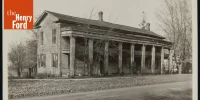
The Early Stagecoach Tavern (Built 1831)
Long before the brick Clinton Inn stood at the corner of Michigan Avenue and Tecumseh Street, Clinton had a wooden stagecoach tavern that served travelers moving through the countryside.
The tavern was built around 1831–1832, during a period when stagecoach travel connected small settlements across Michigan. Taverns were a vital part of early American travel. They offered meals, lodging, and a place to rest for people traveling between communities.
Historical records from The Henry Ford indicate the building may have been constructed by James Parks or an earlier owner of the property, Oramel D. Skinner. Parks operated the tavern beginning in 1834 and later sold it to Calvin and Harriet Wood in 1849. From 1849 to 1854, Calvin Wood ran the tavern and served travelers passing through the growing village.
Over the years the building carried several names, including Parks Tavern, Eagle Tavern, and the Union Hotel.
The original tavern stood along Michigan Avenue (US-12) near Jackson Street, on the site where the Village of Clinton offices now sit next to the post office.
More information about the building can be found in the artifact record from The Henry Ford:
https://www.thehenryford.org/collections/explore/artifact/66929
Henry Ford Preserves the Tavern
By the early 1900s, the once-busy tavern had fallen into serious disrepair and was no longer operating as an inn.
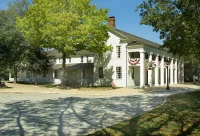
In 1927, Henry Ford purchased the historic building as part of his effort to preserve important pieces of early American history.
The wooden structure was carefully dismantled, transported to Greenfield Village in Dearborn, Michigan, and reconstructed there.
Ford referred to the building as the Clinton Inn, though today the museum calls it Eagle Tavern, reflecting the 1850s era the building represents.
Today visitors to Greenfield Village can still walk through the building and experience what a mid-1800s stagecoach tavern looked like.
The Brick Clintonian Hotel (Built 1901)
While the wooden stagecoach tavern represented Clinton’s early frontier days, the town continued to grow.
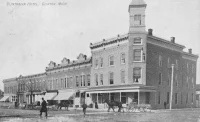
In 1900–1901, a new three-story brick hotel was built in downtown Clinton at the corner of Michigan Avenue and Tecumseh Street.
The building was originally called The Clintonian Hotel.
Unlike the earlier wooden taverns that served stagecoach travelers, the Clintonian was designed as a modern hotel for the new century. It reflected the growing prosperity of the town and offered more substantial accommodations for visitors and business travelers.
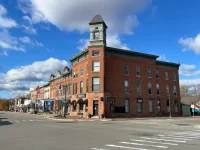
This is the building that still stands today and is now known as The Clinton Inn.
Why the Two Buildings Are Often Confused
For a short period in the early 1900s, both buildings existed in Clinton at the same time.
The older wooden tavern still stood near the site of today’s Village offices while the newer brick Clintonian operated downtown.
Once Henry Ford moved the old tavern to Dearborn in 1927, the brick hotel eventually became the only “Clinton Inn” remaining in town.
As decades passed, the stories of the two buildings naturally blended together, leading many people to believe the current Clinton Inn was rebuilt from the original tavern.
In reality, they were always two separate buildings with different histories.
Two Buildings, One Shared History
Today, both buildings still stand.
The original wooden tavern from 1831 lives on at Greenfield Village, preserved as part of Michigan’s early travel history.
Meanwhile, the brick Clinton Inn built in 1901 continues to stand in downtown Clinton, remaining an active part of the community more than a century after it was built.
Though they share a name, each building represents a different chapter of Clinton’s past.
And together, they tell the story of how a small Michigan village grew from a stagecoach stop into the community we know today.
